Featured

Lisa

It was a beautiful Saturday in late April in 2000. My dad was off from working at UPS and he was pushing my sister Lisa and I on the swings and my mom was sitting on a blanket with my new baby sister Emma who was only 2 weeks old. I was 5 years old, almost 6, and the biggest sister in my family. Since I was the biggest sister, I didn’t need my dad to push me as much as he pushed Lisa, who was only 4 at the time. Lisa wanted to be like me and sometimes I didn’t like that, but on this Saturday, I loved it as we laughed together. It’s like we were flying on the swings.

After what seemed like forever, we pulled into the hospital parking lot and my dad dropped my mom and Lisa off at the emergency doors. As soon as they walked in, people started walking towards them. They slowly disappeared behind the big doors and we went to go park. My dad still wasn’t talking but his long, quick strides told me to hurry up as I tried to keep up behind him.  My dad said his first words as he told me to hang back as he talked to the lady at the front desk. Once again, I tried my best to keep up as we went between those big doors and got to another waiting room. It had a long white hallway with white tiles and it was cold. We just sat down and waited. Not long after, we heard a loud scream. It was Lisa. My dad covered his eyes. We heard her scream 8 more times with every scream just as heart wrenching as the first. Finally, a doctor had come to talk to us, and they told us we could go see Lisa. Well my mom and dad switched spots, but I still didn’t get to go. I wanted to know why Lisa was screaming. I wanted to know that she was okay. She got 9 stitches millimeters away from left eye. My mom said Lisa was really lucky because she didn’t hurt her eye, that they could tell. My mom was quiet again, just like my dad. Some lady that wasn’t a doctor approached my mom, Emma, and I. The lady told my mom that she needed to talk to me – alone. My mom asked some questions that I couldn’t hear and then told me to follow this lady. We went down the big white hallway to a room. The room was even colder, and I was confused why my mom and Emma couldn’t come with me. The lady was nice though. Another lady walked in and they started asking me all kinds of questions about my sister Lisa. “What happened?” “Are your parents nice to Lisa, are they nice to you?” “How did Lisa get hurt?” “Have I ever been hurt like that?” The questions were very repetitive, and I thought they already knew what happened to Lisa. I must have answered the questions right because the nice lady took me back to my mom. We didn’t see her again.

Finally, I got to go see Lisa. My mom, Emma, and I all went back to the room. Lisa’s whole left side of the face was swollen and bruised, and she wasn’t crying anymore. However, I couldn’t hug Lisa; I could only hold her hand. The doctor came in and talked to my parents about how to take care of Lisa. I wasn’t going to be able to sleep in the same bed with Lisa or play with her for a while. Finally, it was time for us to go home. My parents still were in their red soaked shirts and there was some blood on the seats. Lisa smiled on the car ride home.

My backyard was pretty big, and it seemed bigger cause there was no fence between my house and the neighbors that lived behind us. Nothing could ruin this day. My dad went to grab one of our white deck chairs and put it just to the side of Lisa so he could still push her, and I had jumped off to go admire Emma. Suddenly, I heard a loud clunk and screaming. I turned around and my dad was off the chair and kneeling down next to Lisa in the rocks. Lisa had flown backwards off of the swing into the house and hit her head against the rain gutter. Lisa’s skin had turned red and puffy. My dad scooped up Lisa and my mom got Emma. I ran frantically behind. It was a blur. I started crying as I didn’t know what was wrong with my little sister. As we were running past the deck into the house, the neighbors that lived behind us had come out – probably from all the commotion- and asked if I wanted to stay at their house while they went to the hospital. I did not. I wanted to go with my sister to make sure she was okay. I didn’t skip a beat when I told them no and my mom and dad didn’t have time to argue about whether I should stay or not. So, we all filed inside and headed straight to the garage. My mom put Emma in her seat, I got in the way back, and my dad grabbed some towels for Lisa. Lisa was handed off to my mom and my dad got into drive. My mom’s white shirt turned red quickly as she held Lisa against her. My dad drove fast, that’s how I knew it was serious. He would get in trouble with UPS if he got a ticket, but that didn’t matter now. The car ride was so loud but felt so quiet. I wish my sister wouldn’t have let go.

When we got home, Lisa wanted to watch her favorite movie, The Aristocats. Normally, I would argue because we watch that movie all the time. But that day, I couldn’t wait to watch that movie with her. I was so happy my sister was okay. I was so happy I was able to be there for my sister. I used to hate that Lisa wanted to be like me and copy me all the time. But after that day, I wanted to be like Lisa – I still do.

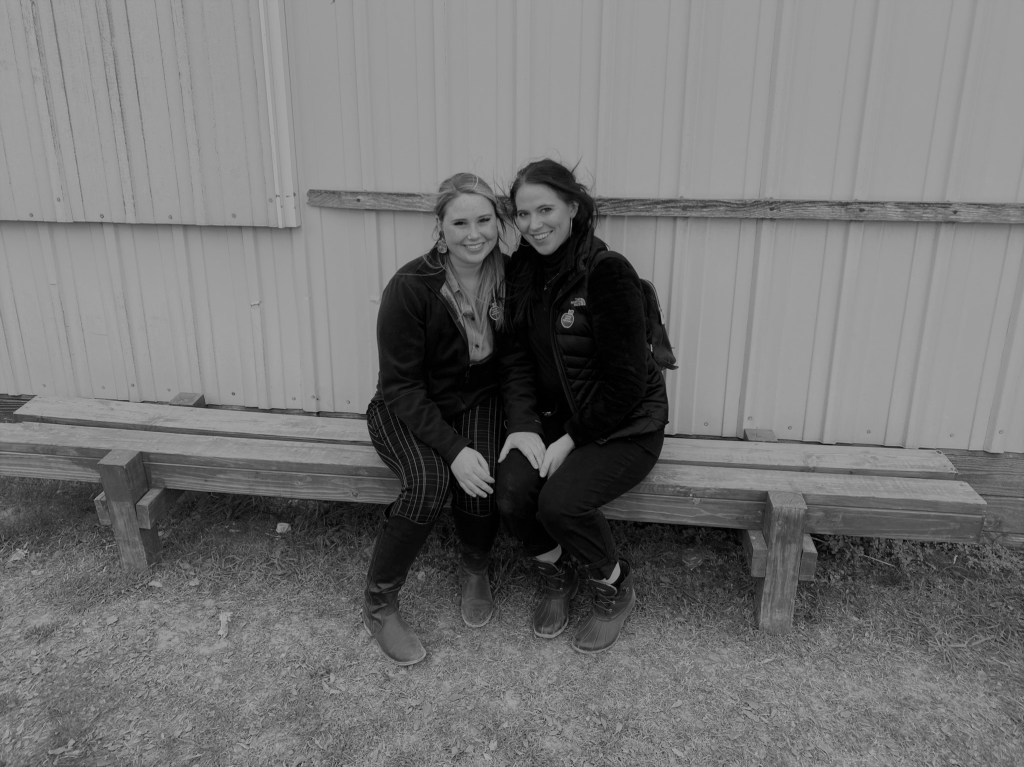
July 2000: 3 months after the accident
Still bestfriends – 20 years later

Nature of Technology

Before we get into the nature of technology, I think it’s important that we first define what a technology is. A technology can be divided into two different categories, technology as an artifact (computer) or technology as a creation process (engineering). More often than not we forget that technology refers to more than just digital technologies like computers and cell phones but includes textbooks, whiteboards, and scissors as well. Keep that in mind as you continue reading.

Understanding the nature of technology (NOT), as teachers we can more carefully “structure technology use in the classroom and decide when technology use might interfere with learning” (Kruse, 2013). In future classrooms, it is going to be super important to consider the tradeoffs associated with technology use. Are we promoting learning or impeding it? However, there is really no best way to integrate technology into teaching, so “integration efforts should be creatively designed or structured for particular subject matter ideas in specific classroom contexts (Koehler & Mishra). Technology can not be applied in a one size fits all approach, the teacher must consider the content, pedagogy, and technology to determine what technology is to be used and how to use it. To do so, they must be technologically literate and understand how to use and manage technology to create and access information. They must know that technology is not neutral nor unbiased so it will come with tradeoffs and limitations and we must understand how society shapes technology and how in turn, technology shapes society. In Alone Together, Sherry Turkle says that “…we think about how new, more efficient technologies might help dig us out. But new devices encourage even-greater volume and velocity (280).” There are constantly new technologies coming out because we are demanding them and always trying to get more. What we must make sure we realize, is we, as people or as teachers, can make a technology be more or less than what it is by the way we use it, both inside the classroom and out.

Students need to understand the NOT as well so technology doesn’t control them but rather they control the technology. It important for students to know that technology can affect the way we feel so it must be used appropriately and in moderation. In my future elementary classes, I am sure I will be using many technologies to support all of my lessons. I know I will be doing lots of small group and large group activities that will allow for a lot of classroom collaboration. It is very important that I pick technologies that help discussion, and do not isolate kids to constructing information individually. I think learning together is a great tool. Teaching students to understand the importance of technology and that the effectiveness comes from how it is used will be very important. With digital technology such as iPads and cellphones on the rise in younger students, it will be important to teach them online safety and address cyberbullying. Showing students the evolution of technology will be important to show them how it has advanced society in certain ways, but also set it back in others. They will need to understand that the technology user has the control in if it is used effectively or not. I am also aware that since it’s becoming so prevalent in youth, they find social media likes and followers so important and the value around having that can mean popularity or more friends. Turkle says, “we settle for the inanimate, if that’s what it takes (281).” It will be crucial to show students how meaningful and relationship based group discussions are in class so they aren’t settling for extrinsic rewards on dashboards and missing out on the rewards of learning and life. My students will know that the technology can not test things such as heart or passion, it doesn’t show someone who has overcome their fears, or achieved their goal. They will know that with teacher support, individual work, and classroom collaboration, they did the work with the support of the technology not because of the technology. Teaching students about the NOT at a young age will allow them to continue building on that to develop a deeper understanding as they navigate through schooling.

Standard 8: Uses educational technology to engage students in collaborative knowledge construction.

Whose heard of Osmo?!? Well let me tell you. It is a great online technology for students K-6. Osmo covers various subject areas and is compatible on an iPad, phone, or the internet. Osmo goes off the 4 C’s. Collaboration, Communication, Creativity, and Critical Thinking. Students will play together that will help aid in their social emotional skills while they are discovering things together. Students will be able to talk about the challenges of each activity together and naturally learn about each other’s strength and weaknesses and help with leadership skills. Students are able to express themselves using real word things in game play in order to find unique answers together. Osmo is a hands on problem solving game that students can work on with many different content areas: Reading, STEM, handwriting, geography.. you name it Osmo has probably got it.

There are different bundle options to purchase Osmos, but once you have Osmo it is easy to set up and teach students about.

Where should we start?

Kahoot!

There are so many technologies out there that can be used in the classroom to promote social interaction and collaboration. However, the teacher must be sure they are using the technologies to enhance their teaching, not as a mean for entertainment. Digital technology can make education more effective WHEN used appropriately. That is the key.

Kahoot! is no exception. Kahoot! is a game based educational technology that can be used for quizzes, surveys, discussions, and friendly competition. Teachers are able to create a free account and make their own platform for learning. It covers all subject areas and can be applicable for all grade levels. Teachers can make their own or use existing quizzes made by other teachers. There are a variety of ways to set up the quiz; multiple choice, ordering, polling the class. It is about how you as the teacher use it to make it effective in your content area.

Students are able to play against each other and receive scores for answering questions right or answering multiple questions right in order. This is a good way to promote friendly competition in the classroom and it keeps it kind of fun for the students. It is a win-win in that regard because who doesn’t like to win and learn at the same time!! Students can play individually or as a team to problem solve.

Kahoot! can be used to assess students prior knowledge, help them review materials, emphasize important concepts, or use as a post lesson / unit assessment to see the progress made. The teacher is able to see what the student knows when they are asking questions that are structured correctly and align with the learning objectives. Kahoot! is not a way to teach new concepts or material as the teacher must do that with their instruction. Kahoot! is a way to support the learning that is done in class. The teacher must know where their students are at so they can make a platform that is most effective to their students. If a teacher does not ask appropriate questions or break up the questions in the most constructive way, Kahoot! will do nothing to foster learning. On Kahoot!, teachers are able to view their game report and track results. After the teacher sees where their students are at, they should plan and instruct lessons that best support the learning needs of the students and the objectives to maximize the learning that is taking place. That goes for all technologies (I know I said it earlier, but that’s how important that is!).

Kahoot! is available online accessible with a computer, tablet, or phone. They also have an app that is available for free that can be downloaded. Check out the Kahoot! quiz that I made for a second grade math lesson!!

https://create.kahoot.it/share/math/f0763271-8f0c-47b0-bffb-85951c0e6a5c

Lets get playing!

Google Expedition

How cool would it be to witness a hurricane or explore the ocean? Imagine being able to do all of this right inside your classroom! Yes, ideally we take kids all over the world to teach them because a concrete experience is the most meaningful way to learn concepts, but Google Expedition is the most realistic way for this to happen. We can show kids from all different social statuses, places all over the world essentially.

Technology has evolved over time and can be a tool for us teachers to use when introducing students to concrete and abstract concepts. By using Google Expedition in your classroom, students will be able to make connections to build their sturdy foundation for learning through 360 degree scenes and 3D objects. Google Expedition is a way for students to virtually experience things that may not be realistic, safe, or accessible in the real world.

Watching a tornado form on Google Expedition will not only be super engaging for students, it will be the most real way for students to experience such a thing. Think of all the places student will be able to go and all of the things they will be able to see. Students will not be traveling blind either, there is a script for teachers to use so they can serve as a guide and closely follow the objectives to reach the desired learning outcomes.

Think of a second grade science lesson on habitats. Students will be able to explore and see the different habitats that are discussed in class to better understand the animals and plants that fill each and what the habitat actually looks like. It is better than a picture as the students will get to experience it themselves. This is a great way to build connections and deepen background knowledge as students will begin comparing and contrasting between the different habitats and understand the similarities and differences in the animal and plant characteristics between habitats.

I hope to use this is a future special education class as I think students will become engaged and motivated to learn about the different topics and concepts if it is introduced in such a fun and exploratory way. Even in an ESL classroom, students will be able to observe the different stimulations that you have chosen to help teach vocabulary as they navigate and see directly what is being talked about in discussions. This can be used in all ages as it can help represent historical landmarks, atomic level, outer space, and different places / habitats all over the world.

Google Expedition is only accessible on iOS products (iPads and iPhones), but the app itself is free. Download from:

https://itunes.apple.com/us/app/expeditions/id1131711060#?platform=ipad

All you need is a google login and you will be able to download the places you want to go and boom, you are able to start exploring all over the world. The Google Cardboard (under 10 dollars) is something that you can buy to enhance this stimulation, however, it is not needed to see the stimulations and get the full 360 degree view.

Where should we go first?

Technologically Literate

I never knew how important it was to be technologically literate. According to ITEAA, being technologically literate allows us to effectively and comfortably use technology to access and create information to solve problems and think critically, while also being able to understand how to evaluate the technology and it’s effect on society. Being technology literate is very important as we need to understand that their are tradeoffs when using technology and the effects of those tradeoffs. Being technologically literate is very important in not only a classroom, but in general because the world is so influenced and controlled by technology. We must always remember how many ways we can use technology and how rapidly changing it can be.

In a classroom, technology is not neutral nor unbiased which can be problematic for teachers. There is no “best way” to integrate technology into the classroom, so teachers should be educated on the technology, content, and pedagogy to insure that they are using technology in a way that best supports learning. Teachers can not ignore the problems that technology presents.

Teachers must be familiar with the technology itself and show students how to legally find and acquire the information from legitimate places and the correct way to do so. They need to show students the “right” and “wrong” way to do such so students are able to tell the difference as they navigate it themselves. Explicitly modeling for students is crucial for them to use the technology in the right way. We must show students how to use the technology to critically think and not as an easy way out. Technology can be an important tool to facilitate and enhance learning if applied in the best way. It is the teacher’s job to do that.